Dentist with digital mouth scanner in Alkmaar
Are you looking for a dentist with a digital oral scanner in Alkmaar? At Himmi Dentist, we use modern 3D scanning technology to quickly, comfortably, and accurately image your teeth. In many cases, the traditional impression tray is no longer necessary. You'll immediately see a crystal-clear 3D image of your teeth on the screen, while we work efficiently and carefully to prepare your treatment.
Would you like to register with our practice in Alkmaar? Click the registration button below and sign up easily.
Dentist in Alkmaar center with digital mouth scanner
Are you looking for a modern dentist in Alkmaar city center who uses a digital oral scanner? Himmi Dentist is located on Bagijnenstraat, in the heart of Alkmaar and within walking distance of the Grote Sint-Laurenskerk (Great St. Lawrence Church). In our practice, we combine personal attention with advanced technology, so you benefit from both comfort and quality.
Thanks to our digital 3D scan, we can accurately prepare treatments without traditional impression trays. Whether it's crowns and bridges, implants, or Invisalign, we work efficiently and carefully with modern equipment. You're welcome to visit us for both general dentistry and specialized treatments, always with clear explanations and attention to your needs.
Do you live in Alkmaar or the surrounding area and want to experience how comfortable a digital oral scan can be? Feel free to contact us or register directly with our practice.
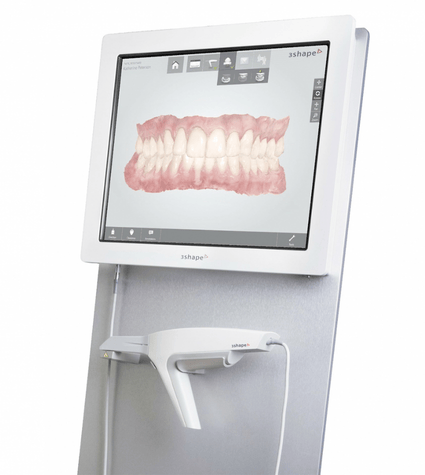
What is a digital oral scanner?
A digital oral scanner is an advanced device that allows us to create a precise 3D scan of your teeth. Instead of working with traditional impression trays and impression material, we gently move a small scanner over your teeth and gums. Within minutes, a detailed digital model of your teeth is created on the screen.
This technique is also called a digital oral scan or 3D dental scan. The major advantage is that we can immediately see what your teeth look like and check the scan for accuracy.
How does a 3D mouth scan work?
The scanner uses a built-in camera and special light projection. As we move the scanner over your teeth, thousands of images are continuously captured. These images are instantly combined into a single, complete 3D model.
You can watch the scan on the screen, allowing you to see how your teeth are being digitally imaged. If a small area is missing, we can fill it in immediately without having to repeat the entire procedure.
Why is a digital oral scanner better?
Because the images are processed digitally, a highly precise model of your teeth is created. This minimizes the risk of deviations that can sometimes occur with traditional impressions due to movement, air bubbles, or material deformation.
For treatments such as crowns, bridges, implanterns For Invisalign, this precision is essential. The more precise the preparation, the better the final result will suit your teeth.
Digital oral scan vs. traditional impression
With a traditional dental impression, you'll have an impression tray filled with impression material placed in your mouth. This needs to be left in place for a while to harden, which can be uncomfortable. Some people experience a gag reflex or simply find the experience unpleasant. Furthermore, a second impression may sometimes be necessary if the material doesn't fit properly.
With a digital oral scan, this is often no longer necessary. Instead of taking impression material, we scan your teeth with a small oral scanner. The images are instantly converted into a precise 3D model that we can check immediately. If a small area is missing, we'll fill it in immediately without having to repeat the entire process.
This makes a digital oral scan more comfortable, faster, and more reliable in preparing for your treatment. It's therefore especially convenient for people with a gag reflex, for patients who find dental work a bit nerve-wracking, and for children who struggle with traditional impressions.
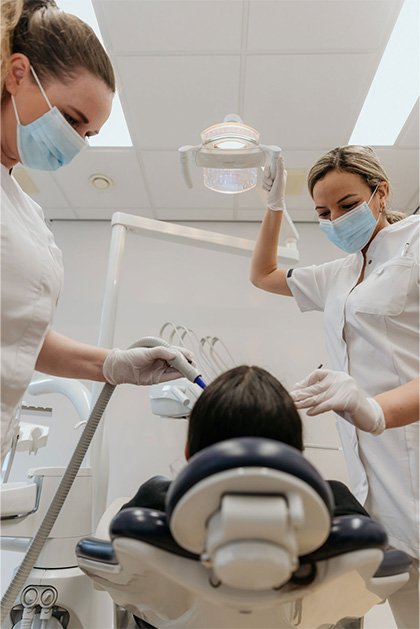
The benefits of a digital oral scanner for you as a patient
Choosing a dentist with a digital oral scanner means choosing greater comfort, greater precision, and a modern approach to your treatment. Switching from traditional impressions to a 3D scan offers clear advantages that you'll immediately notice in the dentist's chair.
More comfort during your appointment
A digital oral scan often eliminates the need for traditional impression trays. You no longer need to hold impression material in your mouth for several minutes. This is especially helpful if you're prone to gagging or find dental work daunting. The scanner moves gently across your teeth, making the experience considerably more comfortable.
Work faster and more efficiently
The scan is created within minutes and displayed directly on the screen. Because we can check the images immediately, there is little chance of having to retake an impression. This saves time and ensures a more efficient treatment process, for example, when preparing crowns and bridges or when creating a treatment plan for aligners.
High accuracy for a better fit
Digital technology produces a highly detailed 3D model of your teeth. This precision is essential for many treatments where the fit truly makes a difference, such as crowns and bridges, implants, and Invisalign. The more precise the preparation, the better the final result will match your teeth and the more comfortable it will feel.
Direct insight and clear explanation
You can watch the scan on the screen. We can explain what we see and discuss your treatment together. This is helpful for both small and larger treatments, as it gives you a better understanding of what's happening and what to expect.
What patients say about our practice in Alkmaar
Would you like to know how patients experience our dental care? Read below reviews from people who have visited our practice. This gives you an honest impression of our approach, our attention, and the atmosphere in the treatment room.
Frequently asked questions about the digital oral scanner in Alkmaar
Below you'll find answers to questions we frequently receive about the digital oral scan and its use in our practice. Do you have a specific question about your treatment? Please feel free to contact us. contact Contact us. We'd love to think along with you.
Does a digital oral scan hurt?
No, a digital oral scan is completely painless. We gently move a small scanner over your teeth and gums to create images. No impression material is used, and nothing is pressed or hardened in your mouth. Most patients find the scan comfortable.
How long does a digital oral scan take?
Creating a digital oral scan usually takes only a few minutes. The exact time depends on the treatment and what exactly we need to capture. Because we can check the images immediately, the scan rarely needs to be retaken.
Is a digital oral scanner safe?
Yes, a digital oral scanner is safe. The scanner uses light and a camera to image your teeth. No X-rays are used during the scan. The technology is widely used in modern dentistry and complies with professional guidelines.
When do you use the digital mouth scanner?
We use the digital oral scanner for crowns and bridges, implants, and treatments with Invisalign or other aligners. A 3D scan can also help accurately map your teeth for other restorative treatments.
Are there additional costs associated with a digital oral scan?
Whether a digital oral scan is charged depends on the treatment. In many cases, the scan is part of the treatment process. We will always clearly inform you of any costs involved when developing your treatment plan.
Is a digital oral scan covered by health insurance?
Reimbursement depends on your insurance and the treatment for which the scan is used. A digital oral scan is usually not billed as a separate treatment, but is part of a broader treatment plan. We advise you to check your policy conditions or contact your health insurer.